What Is Affiliate Marketing? A complete guide.
Affiliate marketing is a way of selling online where a brand pays a partner a commission for every sale, lead or sign-up that partner sends.
What Is Affiliate Marketing? A Plain-English Guide for Affiliates and Brands
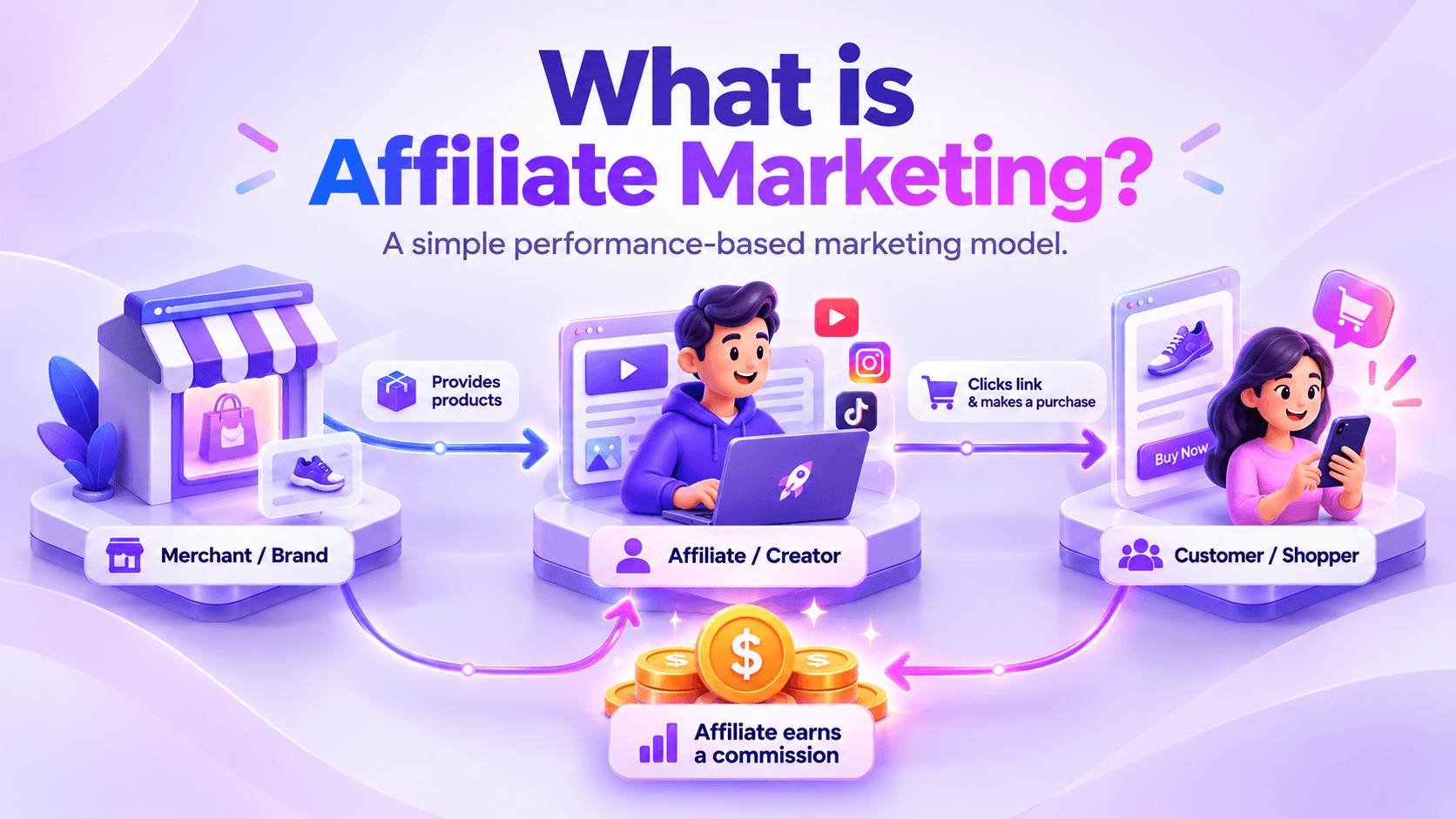
Affiliate marketing is a way of selling online where a brand pays a partner a commission for every sale, lead or sign-up that partner sends. Nobody gets paid for clicks or impressions. The partner earns when the customer buys, and the brand only pays for results it can see.
That one-line definition is easy. What it means in practice depends on which side you're standing on. If you want to make money online, affiliate marketing is a business model you can start with a blog, a YouTube channel or an Instagram account. If you run a store or a SaaS product and want to promote your product, it's a sales channel where you pay after the sale, not before.
This guide covers both. We'll explain how affiliate marketing works, who the players are, how commissions are paid, and then split into two practical paths: one for people who want to earn as affiliates, one for brands who want affiliates selling for them.
Key takeaways
- Affiliate marketing is performance-based: affiliates earn a commission only when a referred customer completes an action, usually a purchase.
- There are four parties: the merchant (brand), the affiliate (publisher or creator), the customer and often an affiliate network that handles tracking and payouts.
- Sales are tracked through unique affiliate links, cookies, server-side tracking or discount codes.
- For affiliates, it's a low-cost way to earn online, but it takes months of consistent, honest content to build real income.
- For brands, an affiliate program turns marketing spend into a cost per sale, so you know your margin before you spend a penny.
What is affiliate marketing, in simple terms?
Think of it as a referral fee, scaled up for the internet. You've probably done it offline: you recommend a plumber to a neighbour, and the plumber thanks you with a bottle of wine. Affiliate marketing is the same idea, except the recommendation happens through a link, the "thank you" is a fixed percentage of the sale, and software tracks everything so nobody has to remember who sent whom.
A food blogger writes about the best stand mixers and links to a kitchen retailer. A reader clicks, buys a mixer, and the retailer pays the blogger 6% of the order. The reader pays the same price they would have anyway. The retailer gets a customer it might never have reached. The blogger gets paid for being useful. That's the whole model.
How does affiliate marketing work?
Every affiliate sale follows the same five steps, whether it's a £15 phone case or a £2,000 software subscription.
Step 1: Join. The affiliate applies to an affiliate program, either directly on the brand's website or through an affiliate network. Once approved, they get a tracking link that contains their unique ID.
Step 2: Promote. The affiliate places that link where their audience already is: a comparison article, a YouTube description, a newsletter, a TikTok bio, a coupon site.
Step 3: Click and track. When someone clicks, the tracking system stores the referral. Traditionally this was a browser cookie; today most serious programs also use server-side (postback) tracking because browsers block more third-party cookies every year. The cookie duration (often 30 days, sometimes 7, sometimes 90) is how long after the click a purchase still counts.
Step 4: Convert. The customer completes the action the brand is paying for. Usually that's a sale, but it can be a free trial, a quote request or an app install.
Step 5: Validate and pay. The brand checks the order isn't returned, cancelled or fraudulent, then approves the commission. Payouts typically arrive monthly once you pass a minimum threshold.
A worked example: where the money goes
Say a running-shoe brand pays 10% commission. A fitness YouTuber reviews a pair of trainers and links them in the description.
£12 doesn't sound like much. But if that video keeps getting watched and sends 40 sales a month, it's £480 a month from one piece of content. And for the brand, £12 to acquire a customer who may buy again is often cheaper than paid social, where you pay for the click whether anyone buys or not.
Who's involved in affiliate marketing?
- The merchant (brand or advertiser). The business selling the product. It sets the commission rate, the rules and the cookie window.
- The affiliate (publisher, partner or creator). Anyone promoting the product: bloggers, YouTubers, influencers, comparison sites, cashback and coupon sites, newsletter writers, even other businesses.
- The customer. The person who clicks and buys. In a healthy program, they get a genuinely useful recommendation and sometimes an exclusive discount.
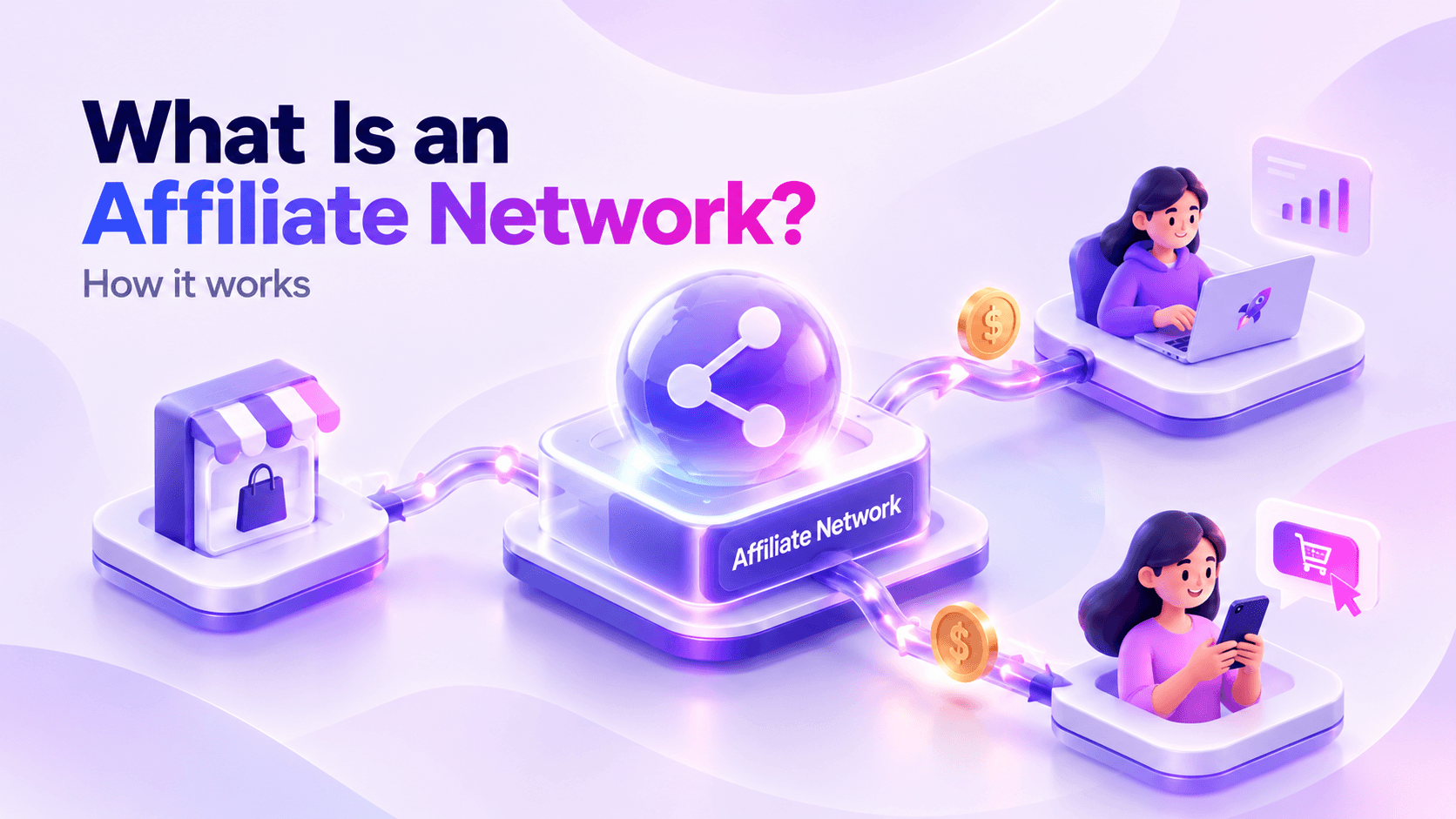
- The affiliate network or platform. Optional, but common. Networks like Awin, Impact.com, CJ, Rakuten, ShareASale, ADCELL and Daisycon provide the tracking, reporting and payments, and give brands access to thousands of existing affiliates.
How are affiliates paid? Common commission models
Not every program pays the same way. Here are the models you'll see most often.
| Model | You get paid when… | Typical in |
|---|---|---|
| CPS / revenue share | A customer buys. You earn a % of the order value. | E-commerce, fashion, beauty, home |
| CPA (cost per acquisition) | A defined action happens, for a flat fee. | Finance, insurance, subscriptions |
| CPL (cost per lead) | Someone fills in a form or books a demo. | B2B, education, services |
| Recurring commission | Every month the referred customer keeps paying. | SaaS, memberships, hosting |
| Hybrid (flat fee + commission) | You get a fixed fee for posting plus a % of sales. | Influencer and creator campaigns |
Part 1: Affiliate marketing for people who want to make money online
Let's be straight about this first. Affiliate marketing is not passive income on day one, and anyone selling you a "£10K a month in 30 days" course is selling the course, not the method. What it is: one of the few online business models you can start with almost no money, no stock and no customer service, where the work you do this month can keep paying you for years.
The people who succeed treat it like publishing. They pick a topic, help a specific audience make better buying decisions, and stay consistent long enough for search engines and followers to trust them.
How to start affiliate marketing as a beginner: a 6-step roadmap
- 1Choose a niche you can talk about for a year.
Narrow beats broad. "Home coffee gear for beginners" is easier to rank for than "kitchen". - 2Pick your platform.
A blog for search traffic, YouTube for reviews and tutorials, Instagram or TikTok for discovery, email for repeat sales. - 3Join the right affiliate programs.
Start with Amazon Associates or a network like Awin or Impact.com, then apply to brands' own programs as you grow. - 4Create content that answers buying questions.
Reviews, "best X for Y" lists, comparisons, how-tos. Use the product if you can. - 5Disclose your links and build trust.
It's a legal requirement in the UK, US and EU, and audiences reward honesty. - 6Track, learn, double down.
Check which posts earn, update them, and make more of what works.
Content that actually earns affiliate commissions
Most affiliate income comes from people who have already decided to buy something and are choosing which one. Your job is to be the clearest, most honest voice at that moment. The formats that do this best:
- Product reviews with real photos, real pros and cons, and who it's not for.
- "Best of" roundups such as "best budget espresso machines under £200".
- Comparisons like "Product A vs Product B", where the reader is one decision away from buying.
- Tutorials that naturally use a tool, e.g. "how to start a podcast" linking to the mic you use.
- Resource pages listing the gear or software you genuinely rely on.
How much can you earn with affiliate marketing?
Honestly, it ranges from nothing to a full-time salary, and the difference is rarely luck. Income comes down to three numbers: how much targeted traffic you get, what percentage of it clicks and buys, and how much you earn per sale. A small site promoting £30 products at 4% needs a lot of sales to matter. A niche newsletter recommending software that pays 30% recurring can earn more with a fraction of the audience. Expect the first 6 to 12 months to be mostly building.
Mistakes beginners make
- Promoting whatever pays the most instead of what the audience needs.
- Writing thin "top 10" lists of products they've never seen.
- Dropping links everywhe
 Skyler White