What Is an Affiliate Network? How It Works
Learn what an affiliate network is, how tracking and commissions work, and how brands and affiliates can choose a network that fits their needs.
Affiliate basics · Updated 9 October 2026
What Is an Affiliate Network? How It Works
An affiliate network helps brands find partners who can promote their products. It also provides the tools to track referrals, report results and manage commission payments. But joining a network is only the starting point. Brands still need suitable partners, and affiliates still need an audience that trusts their recommendations.
What is an affiliate network?
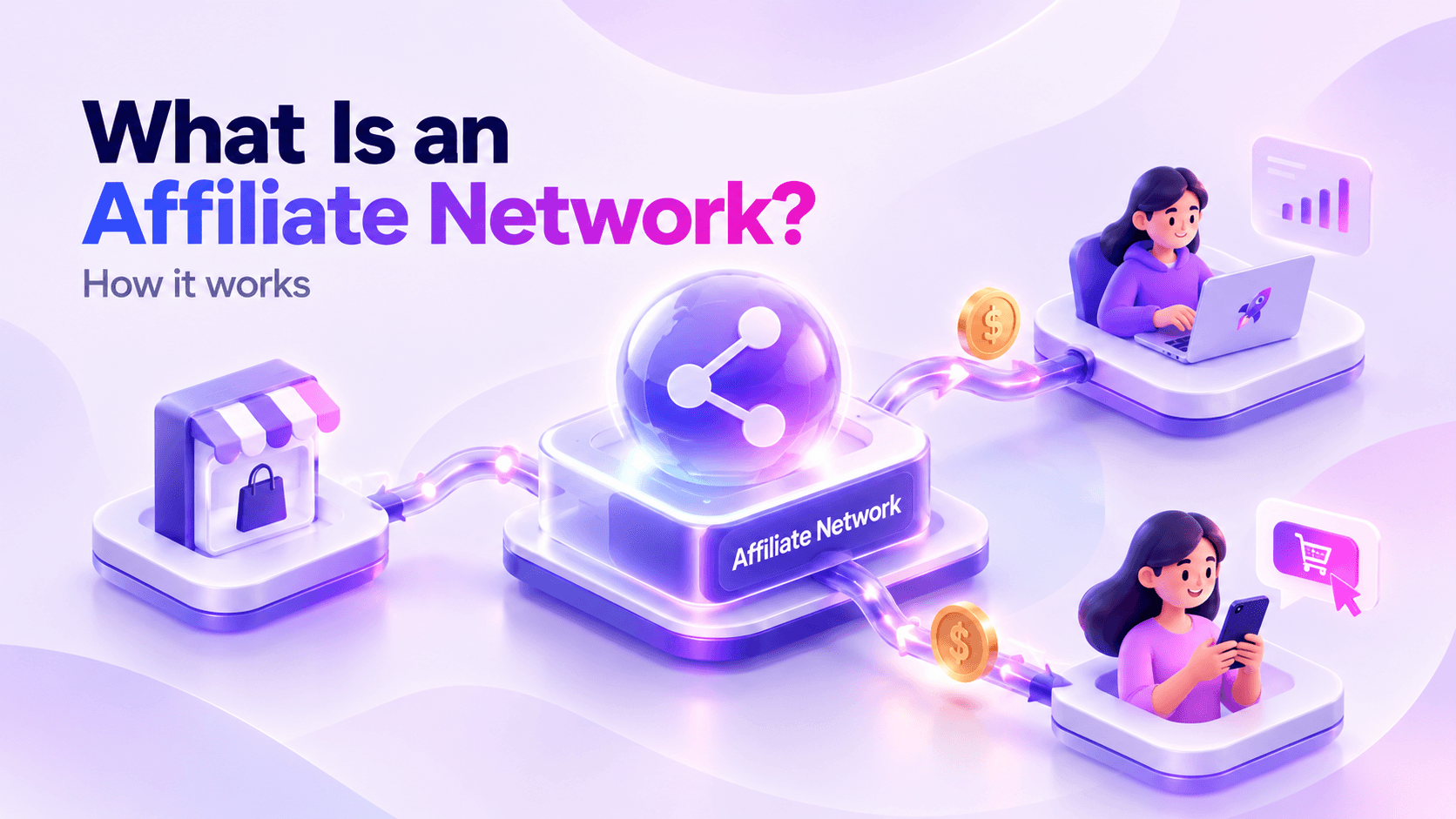
An affiliate network is a platform that connects businesses with affiliates who promote their products or services. The business is usually called an advertiser or merchant. The affiliate may be a blogger, creator, comparison website or other publisher.
The network brings many brands and partners into one system. Affiliates can find programs to apply to, while brands can review partner applications and share tracking links. The network records qualifying referrals and helps manage commissions under each program’s rules.
For example, a travel blogger might join a network, apply to a luggage brand’s affiliate program and link to a suitcase in a packing guide. If a reader follows that link and places an eligible order, the blogger can earn a commission.
The key distinction
The network provides the shared platform. The affiliate program is the individual brand’s offer. Joining the network does not automatically give an affiliate permission to promote every brand on it.
Who is involved?
| Party | Role | Example |
|---|---|---|
| Advertiser or merchant | Sells the product and sets program terms. | A luggage store offering commission on eligible orders. |
| Affiliate or publisher | Introduces the product to an audience. | A travel blogger publishing a packing guide. |
| Affiliate network | Connects the parties and supports tracking, reporting and payments. | Awin, CJ or Rakuten Advertising. |
| Customer | Follows the recommendation and decides whether to buy. | A reader buying a suitcase from the store. |
The network usually does not sell or ship the product. The customer buys from the brand, which handles the order, delivery and customer service.
How does an affiliate network work?
A typical sale follows six steps. The exact tracking method, approval process and payment schedule depend on the network and the brand’s program.
Figure 1. From program setup to commission payment. A recorded sale is not always an approved sale.
1. The brand sets up its affiliate program
The brand defines what it will pay for: a sale, a qualified lead or another agreed action. It sets commission rates, permitted promotional methods, eligible products and review rules. It also installs the required tracking and tests it before inviting partners.
2. Affiliates apply to suitable programs
An affiliate creates a network account and looks for relevant brands. Individual advertisers may review the affiliate’s website, audience and promotion plan. Some programs offer automatic approval; others approve each application. Network membership and program approval are separate decisions.
3. Approved affiliates share tracking links
The affiliate uses a link that identifies the referral. They might add it to a product review, video description or newsletter. Linking to the specific product discussed can make the next step easier for the reader. Promotional content should explain the affiliate relationship clearly and follow the program’s terms.
4. Tracking connects the referral to a result
When the customer clicks, the tracking system records information about the referral. If the customer completes an eligible action, the brand’s integration sends conversion details to the network. Those details can include an order reference, eligible sale value and currency.
Networks may use browser-based tracking, server-to-server tracking or a combination. Some programs also support code-based attribution. These methods depend on the implementation; none should be assumed to record every possible customer journey.
5. The brand reviews the transaction
A commission may first appear as pending. The advertiser checks for returns, cancelled orders, duplicate transactions or activity that breaks its terms. A cancelled order may lead to a reversed commission. Review periods vary, so a dashboard entry should not be treated as money already available to withdraw.
6. Approved commissions are paid
Eligible commissions move through the network’s payment process. Payout timing can depend on the review or locking cycle, advertiser funding, minimum payment threshold and completed account details. CJ, for example, describes a transaction locking cycle before commissions become eligible for payment.
A simple affiliate network example
Let’s use a made-up luggage store to show the numbers. These are example terms, not a quote from a network.
Worked example
A blogger refers an order with an eligible sale value of $200. The brand offers 10% commission.
$200 × 10% = $20 affiliate commission.
If the order meets the program’s rules and remains valid after review, the blogger earns $20. The brand may also owe separate network fees under its contract.
The eligible sale value is important. A program may exclude shipping, taxes or certain items from commission calculations. A $200 checkout total therefore does not always mean $200 is commissionable.
What are cookie windows and attribution rules?
A cookie window is the period after a referral click during which a purchase may qualify for commission. For instance, a program could offer a 30-day window. That does not mean every purchase within 30 days belongs to the first affiliate.
Attribution means deciding which referral receives credit. Program rules may give credit to the last eligible affiliate click, or use another approach. A later click, an excluded product or missing referral data can affect the outcome.
Example: A shopper clicks Affiliate A’s link, then Affiliate B’s link before buying. If the program uses last eligible affiliate click attribution, Affiliate B may receive the commission. Always read the actual rules before forecasting earnings.
Affiliate network vs affiliate program vs affiliate software
| Term | What it means | What to check |
|---|---|---|
| Affiliate network | A shared platform connecting multiple advertisers and publishers. | Relevant partners, tracking, support and commercial terms. |
| Affiliate program | One brand’s arrangement for rewarding qualifying referrals. | Commission, eligible actions and promotion rules. |
| Affiliate software | Technology used to run and track a program. | Integration, reporting, payments and recruitment features. |
| Affiliate agency | A service provider that helps operate and grow programs. | Scope of work, reporting and management responsibilities. |
These categories can overlap. Some software providers also have partner marketplaces. A brand can use a network and hire an agency to manage recruitment and day-to-day operations at the same time.
Examples of affiliate networks
Awin, CJ and Rakuten Advertising are examples of affiliate networks. Their official websites describe tools for advertisers and publishers to form partnerships and track activity. The right choice depends on the partners and brands you want to work with, rather than the platform name alone.
Before committing, check the current advertiser directory, supported markets, integration requirements and terms. A large directory is useful only if it contains brands or partners that match your needs.
How do affiliate networks make money?
Commercial arrangements differ. Advertiser costs may include a setup charge, a subscription or minimum fee, and a charge linked to performance. Service or account-management fees may also apply. Ask for the full contract and an example invoice rather than comparing headline commission rates alone.
Publisher costs also vary. CJ states that publishers can create an account for free. That should not be used to assume every network has identical joining terms.
Brand cost checklist
Affiliate commissions + network charges + management costs + any agreed placements or incentives.
Review these alongside product costs, discounts, fulfilment and returns. A campaign can generate sales while leaving too little profit.
Benefits and limits for brands and affiliates
| For brands | For affiliates |
|---|---|
| Find potential partners in a shared system. | Discover multiple advertiser programs in one place. |
| Review partner activity and commission reports. | Access tracking links and performance reports. |
| Manage program rules and transaction reviews. | Compare offers and monitor commission status. |
| Still need recruitment, activation and margin checks. | Still need useful content, audience trust and qualifying results. |
A network gives you infrastructure and access. It does not guarantee that approved affiliates will start promoting, or that a campaign will produce profitable sales. For brands, we recommend tracking partners who send relevant traffic and approved orders, not only the number of accepted applications.
How to choose an affiliate network
If you are a brand
- Start with partner fit. Identify the publishers you want to recruit and check where they work.
- Check the integration. Confirm compatibility with your store, checkout and any app.
- Calculate the full cost. Request all fees, commitments and notice periods in writing.
- Test reporting. Check clicks, test orders, eligible values and reversals.
- Plan operations. Assign responsibility for outreach, approvals, partner support and payment reviews.
If you are an affiliate
- Choose audience fit. Find brands your readers or viewers have a reason to buy from.
- Read the terms. Check rates, referral windows, exclusions and permitted channels.
- Check payment access. Confirm supported locations, payout methods and thresholds.
- Assess the destination. A useful product page matters as much as an attractive commission.
- Start with a manageable set. Learn which offers produce approved commissions before adding more.
Do you need a network to run an affiliate program?
No. A brand can run a direct affiliate program using suitable tracking software. A network may be useful when the publishers you want already work there, or when its reporting and payment services meet your operational needs.
A direct program may suit a brand that already has a creator or customer community. Compare the cost of the platform with the work required to recruit partners, support them and manage payments. Neither route removes the need for active management.
Frequently asked questions
Is an affiliate network the same as affiliate marketing?
No. Affiliate marketing is the practice of rewarding partners for agreed referral results. A network is one way to organise those relationships and the supporting technology.
Does joining a network approve me for every brand?
No. Many advertisers have separate application requirements. Check each program’s approval process and terms before promoting it.
Can social media creators join affiliate networks?
Some networks support creators and social publishers. Eligibility depends on the network and advertiser. Check whether your channel and promotional methods are accepted.
Do affiliates earn commission for clicks?
In a sale-based program, a click alone does not earn commission. The customer must complete the qualifying action. Other payment models exist, so read the offer instead of assuming all programs pay the same way.
Why is my commission pending?
The transaction may still be under review or waiting to enter the payment cycle. Check its status, the advertiser’s validation terms and the network’s payment guidance.
Which affiliate network is best for beginners?
There is no single best network for everyone. Start with audience fit, program access, clear terms and supported payment options. A relevant offer is more useful than a long list of unrelated brands.
Choose a network that fits your partners
We can help you compare options, review tracking and build a recruitment plan for your brand.
Book a free growth callContact: info@affilinks.io
Sources and further reading
Official documentation checked on 9 October 2026. Examples in this article are illustrative; network terms can change.


 Skyler White